

MUSCAT: For eight Omani startups, the next challenge is no longer simply developing a product or finding customers at home. It is finding out whether what they have built in Oman can compete in the United States.
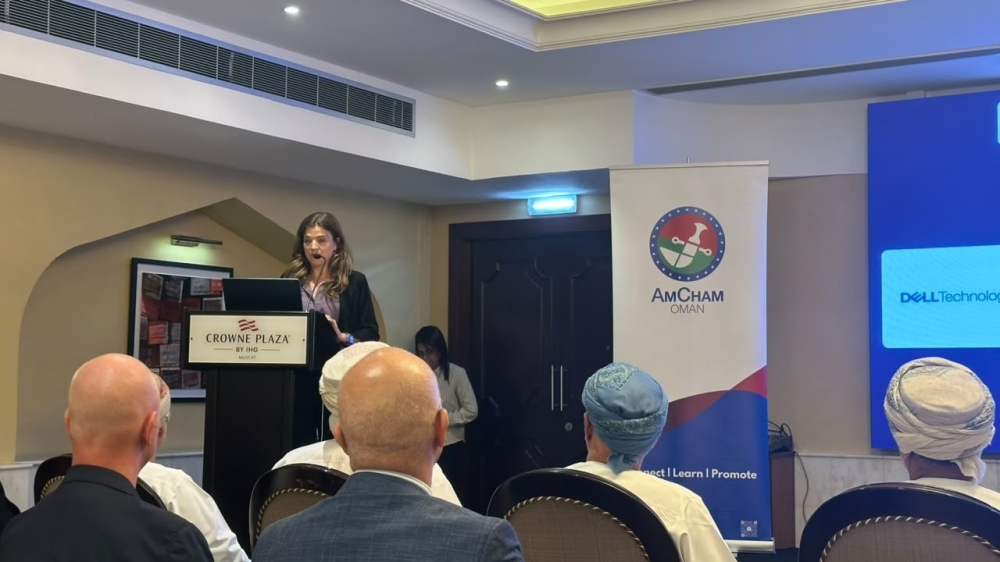
That is the task facing the first group of companies selected for the Numo USA Market Accelerator, launched in Muscat on Wednesday by the Ministry of Transport, Communications and Information Technology and the American Chamber of Commerce in Oman (AmCham Oman).
Over the next year, the companies will work with experienced technology executives, examine their business models and seek introductions to potential American customers, investors and commercial partners.
The businesses come from different corners of Oman’s growing technology sector, including cybersecurity, artificial intelligence, accommodation services and shared transport.
Among them is Masarrah Stays, a short-term accommodation marketplace led by Co-Founder and CEO Ahmed Al Shaibani, and Sayyar, a shared commuting platform headed by CEO Omer Al Ghafri.
Others are developing technology for businesses. iON, led by Co-Founder and CEO Moawiya Al Rawas, works on artificial intelligence solutions for business process automation.
Orki, headed by Dr Jabir Al Salami, develops AI agents for enterprises, while Manara AI, led by Hamza Al Aufi, focuses on automating governance, risk and compliance processes for critical infrastructure.
Octopus Cybersecurity and NeoSec AI, the latter led by Ammar Al Siyabi, are also among the selected companies.
Their products and business models differ, but they face a similar question: can they find customers willing to pay for their services in a market where established international competitors are already operating?
Rebecca Olson, CEO of AmCham Oman, acknowledged that entering the United States can be difficult for companies unfamiliar with the market.
Rather than attempting to reach the entire country, she encouraged founders to begin by understanding who needs their products, how those customers make purchasing decisions and how to approach them.
The first step could be a meeting with a potential partner, a product demonstration or a small pilot project that allows a company to test its technology with an American customer.
Each startup will begin with a commercial readiness assessment examining its target customers, pricing, market positioning and sales approach.
The companies will then be paired with senior executives from AmCham Oman’s Technology and AI Committee, who will work with them throughout the year.
The chamber will also help arrange introductions to prospective customers, investors and industry specialists, depending on what each business needs.
One potentially significant opportunity lies in US government procurement.
Under the Oman-US Free Trade Agreement, eligible Omani companies can compete for certain American government contracts. The accelerator will help participants identify relevant opportunities and understand the registration process through SAM.gov, the US government’s procurement platform.
That does not mean contracts are guaranteed. Companies must still meet the relevant eligibility, technical and procurement requirements.
The programme builds on the ministry’s existing Numo initiative, which supports the development of Omani technology businesses.
A ministry representative said the objective was to help technology products and services developed in Oman reach customers abroad, creating opportunities for investment, skilled employment and digital exports.
Sheikh Saif Al Hosni, Chairman of AmCham Oman’s Technology and AI Committee and Country Manager of Microsoft Oman and Bahrain, said ambition alone would not be enough to succeed internationally.
Companies, he said, need a clear proposition, a sound understanding of their customers, trusted relationships and the resilience to adapt when their original plans do not work.
His committee will provide the participating founders with practical advice and access to business contacts over the coming year.
The companies will also receive a year’s premium membership of AmCham Oman, whose network includes more than 320 member businesses. That will give them access to networking events, workshops and potential commercial partners.
Dell Technologies, MHD Infotech, Tellefsen and SAS are supporting the accelerator.
For the founders, however, the real test begins after the launch ceremony.
A cybersecurity company may need to satisfy demanding customer security requirements, while an accommodation or commuting platform will have to understand local regulations, consumer habits and the costs of operating in a different market.
Those challenges cannot be resolved through introductions alone. They require companies to test whether their products meet genuine demand and whether customers are prepared to pay for them.
The organisers have not disclosed the programme’s budget or set out measurable targets for contracts, investment or export revenue.
Nor have any American contracts or investments resulting from the accelerator been announced.
A year from now, the clearest measure of progress will not be how many meetings the founders attended, but whether those conversations helped them win customers and build businesses capable of earning revenue beyond Oman.
Oman Observer is now on the WhatsApp channel. Click here